
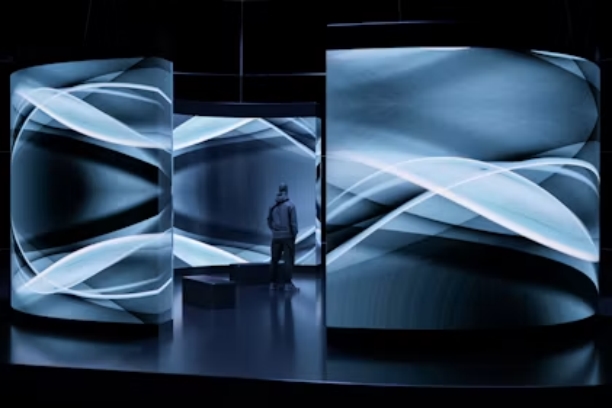
Exhibition design is increasingly focused on creating spaces that attract attention while giving visitors a memorable visual experience. Traditional flat displays can present high-quality content, but they may not always create the sense of depth and immersion that modern exhibitions require. A rental P2.9 curved LED display combines fine pixel pitch with flexible curved installation, allowing designers to build distinctive visual surfaces for exhibitions, brand activations, showrooms, and indoor events. Furthermore, its modular rental-oriented structure makes it easier to adapt the display to different venue layouts and temporary projects.
Why P2.9 Pixel Pitch Works for Exhibition Displays
Pixel pitch plays an important role when an LED screen is viewed from relatively short distances. With a 2.9762mm pixel pitch and a pixel density of 112,896 dots per square meter, the display can reproduce detailed images while maintaining smooth visual transitions. Therefore, visitors standing relatively close to an exhibition screen can still enjoy clear graphics, product visuals, videos, and branding content without the image appearing excessively pixelated.
The display also provides brightness of approximately 1000 cd/m² and a contrast ratio of at least 6000:1. In addition, the 6500K color temperature supports a balanced visual appearance for indoor exhibition environments. As a result, designers can create bright and visually engaging content while maintaining strong image definition.
Curved Design Creates a More Immersive Experience
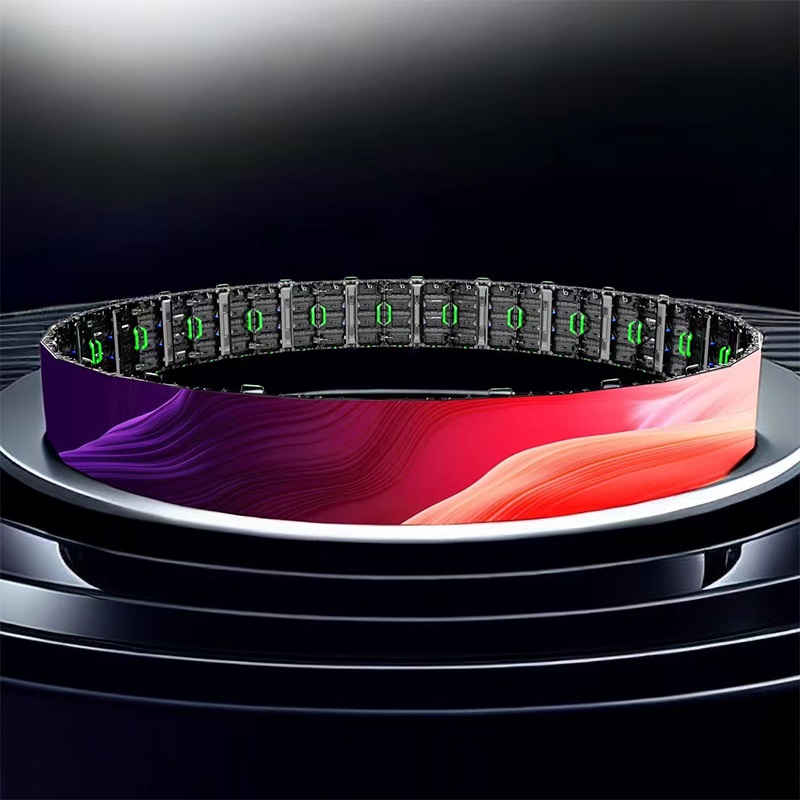
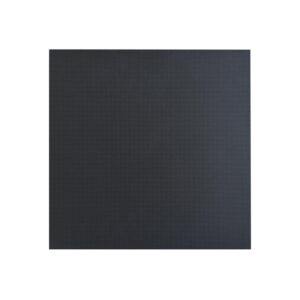
A curved LED display can change the way visitors interact with digital content by extending the visual field beyond a conventional flat screen. The 500 × 500mm modular cabinets can be connected into curved configurations, allowing designers to create concave or other customized screen shapes according to the exhibition concept. Moreover, the lightweight aluminum cabinet weighs approximately 7.1kg per panel, which makes handling and installation more manageable during temporary events.
Instead of treating the screen as a simple background, designers can use the curved surface as part of the overall spatial experience. For example, a curved screen can surround a product presentation area, form a dynamic backdrop for a brand activation, or create a panoramic visual wall in a showroom. Consequently, the display becomes part of the exhibition architecture rather than simply an independent advertising device.
Key design advantages include:
- Flexible curved splicing for creative exhibition layouts
- 500 × 500mm modular cabinet size for easier configuration
- Lightweight 7.1kg aluminum cabinet for handling and installation
- Suitable for temporary exhibitions and event environments
- Supports immersive backgrounds and panoramic visual effects
High Refresh Rate for Smooth Motion Content
Exhibition screens frequently display promotional videos, product demonstrations, animations, and other moving content. A high refresh rate is therefore important, particularly when the screen is photographed or recorded during an event. With a refresh rate of up to 7680Hz, the display can deliver smoother motion and help reduce visible flicker in camera footage.
This capability is especially useful for exhibitions that receive professional photography, livestreaming, or broadcast coverage. Furthermore, smooth image reproduction helps preserve the quality of fast-moving promotional content. As a result, brands can maintain a more polished visual presentation both to visitors at the venue and to audiences viewing event footage online.
Wide Viewing Angles Improve Visitor Engagement
Visitors rarely stand directly in front of an exhibition display. They may approach from the side, move around the booth, or view the screen while interacting with nearby products. The display provides a 160° horizontal viewing angle and 140° vertical viewing angle, helping maintain consistent visual performance across a broad viewing area.
This wide-angle capability gives exhibition designers greater freedom when positioning the screen. Rather than designing the entire experience around one central viewing point, content can remain visually accessible as visitors move through the space. Therefore, the display can support more natural visitor movement while maintaining strong brand visibility.
| Feature | Exhibition Design Benefit |
|---|---|
| 2.9762mm pixel pitch | Detailed visuals for relatively close viewing |
| 112,896 dots/㎡ | High pixel density for clear content |
| 1000 cd/㎡ brightness | Strong visual impact in indoor spaces |
| ≥6000:1 contrast | Clearer image depth and detail |
| 7680Hz refresh rate | Smooth motion and camera-friendly performance |
| 160° H / 140° V viewing angle | Wider visibility for moving visitors |
| 500 × 500mm cabinet | Flexible modular installation |
| 7.1kg cabinet weight | Easier transportation and handling |
Rental-Friendly Construction Simplifies Event Setup
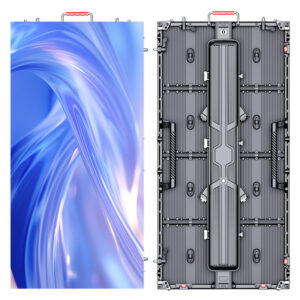
Temporary exhibition projects often have limited installation time, so equipment that can be handled efficiently can make a significant difference. The lightweight aluminum cabinet helps reduce the physical effort required during transportation and setup, while the modular 500 × 500mm format supports flexible screen configurations. In addition, rear maintenance allows technicians to access the display from the back without completely removing the screen, which can help reduce maintenance time and labor requirements.
The cabinet is designed for indoor use with an IP40 rating, making it appropriate for controlled environments such as showrooms, exhibition halls, retail spaces, and stages. Moreover, the AC 110–220V voltage range supports installations across different markets. Consequently, the display can be incorporated into a wide range of temporary and semi-permanent indoor projects.
Energy Efficiency Supports Extended Exhibition Use
Although visual impact is a major priority, energy consumption also deserves attention when a display operates for many hours each day. The average power consumption is approximately 154W/㎡, providing a balance between visual performance and operating efficiency. Furthermore, the operating temperature range of -20°C to +45°C provides reliable performance across different indoor climate conditions.
For exhibition organizers and rental companies, this combination can help simplify project planning. Lower average power consumption can be considered when estimating venue electricity requirements, while stable operation supports longer display schedules. Therefore, energy efficiency becomes another practical factor when selecting LED equipment for repeated event use.
Choosing the Right Display for Immersive Exhibition Design
A successful exhibition display needs to balance image quality, physical flexibility, installation efficiency, and operating reliability. The rental P2.9 curved LED display brings these elements together through a fine pixel pitch, curved-friendly modular structure, wide viewing angles, and a high refresh rate. As a result, it can support immersive visual concepts without requiring designers to rely on a conventional flat-screen format.
For exhibition companies, rental providers, brand agencies, and showroom designers, the display can be adapted to different project requirements. Lihe Opto provides LED display products designed for commercial visual applications, allowing customers to explore configurations based on venue size, viewing distance, content requirements, and installation conditions. With the right configuration, a curved LED screen can transform a conventional exhibition area into a more engaging and visually connected environment.
Conclusion
The combination of fine pixel pitch and curved modular construction makes this type of LED display particularly suitable for immersive indoor exhibition design. Its 7680Hz refresh rate, wide viewing angles, lightweight cabinet, and rear maintenance design further support demanding event applications. More importantly, the flexible curved structure allows designers to treat the display as part of the exhibition environment itself, creating visual experiences that extend beyond a traditional flat screen.

Add comment