
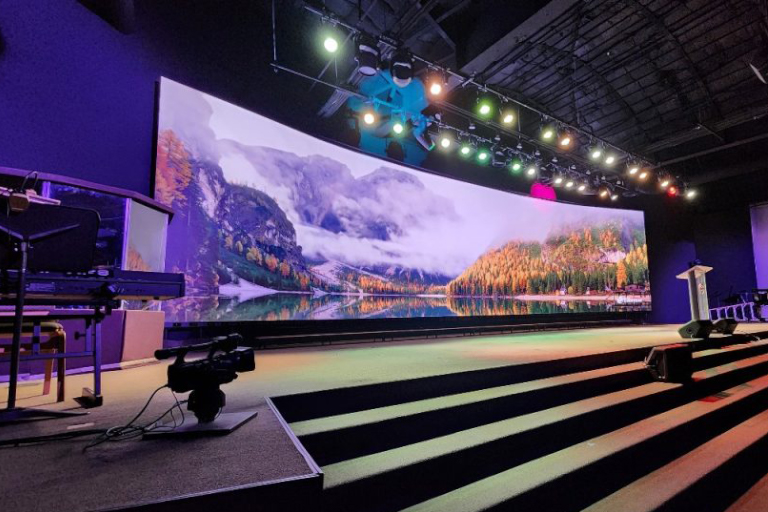
Managing a successful outdoor concert requires equipment that defies the elements. Direct sunlight often washes out standard displays, leaving the audience frustrated. However, modern technology allows touring-grade rental LED screens to stay vibrant in any weather. This guide explores the balance between extreme brightness and power efficiency. We show you how to maintain visual clarity while cutting energy costs. Discover the engineering behind professional festival displays that shine all day.
1. The 5000-Nit Standard: Defeating the Noonday Sun
Visibility depends on the screen’s ability to compete with ambient light.
Why Brightness Matters for Outdoor Events
Standard indoor screens often provide only 1000 nits of brightness. Consequently, they appear black or faded when placed in an open field. Touring-grade rental LED screens must reach at least 5000 nits. This extreme output ensures that high-contrast images remain sharp at high noon. Furthermore, it allows for vivid colors even during the brightest summer festivals. Therefore, high-nit ratings are a non-negotiable requirement for professional outdoor tours.
2. Brightness Requirements for Different Environments
Use this table to choose the right output for your specific event location.
| Environment | Ambient Light Level | Recommended Brightness |
| Indoor Stage | Controlled / Low | 800 – 1,200 Nits |
| Outdoor Shade | Indirect Sunlight | 2,500 – 3,500 Nits |
| Direct Sunlight | Clear Sky / Noon | 5,000 – 7,000 Nits |
| Extreme Beach | Reflected Sunlight | 7,000+ Nits |
3. The Efficiency Secret: Common Cathode Technology
Extreme brightness usually requires massive amounts of electrical power.
The Common Cathode Breakthrough
Traditional LED displays waste significant energy as excess heat. Consequently, they require heavy cooling systems and large generators. Modern touring-grade rental LED screens utilize common cathode technology. This system provides a dedicated power supply for the red LED chips. Furthermore, it eliminates the need for power-wasting resistors in the circuit. Therefore, you can reduce total power consumption by up to 30%.
Reducing Heat for Longer Lifespan
Lower power consumption directly leads to much cooler operating temperatures. Consequently, the LED chips face less thermal stress during long shows. This prevents the “color shift” that often ruins older outdoor displays. Furthermore, the electronic components inside the cabinets last significantly longer. Therefore, energy-saving designs improve both your budget and your reliability.
4. Strategic Benefits of Modern Rental Screens
High-performance screens provide more than just a bright picture.
- Automatic Brightness Adjustment: Sensors dim the screen at night to save power.
- Rapid Deployment: Lightweight aluminum frames allow for fast assembly.
- High Refresh Rates: Ensure flicker-free images for professional television cameras.
Consequently, your production team will face fewer technical hurdles on site. Touring-grade rental LED screens are built to survive the rigors of travel. Furthermore, the energy-saving tech allows you to run more screens on one circuit. Therefore, you simplify your power logistics for every tour stop.
Conclusion: Lighting Up the Stage with Precision
Professional outdoor displays are a combination of raw power and smart design.
Stop letting the sun dictate the quality of your visual production. Instead, invest in the high-brightness and energy-efficient power of modern LED arrays. Consequently, your audience will enjoy a crystal-clear show from any distance. Experience the visual impact of professional touring-grade rental LED screens today. Your event deserves a display that shines brighter than the sun.

Add comment