
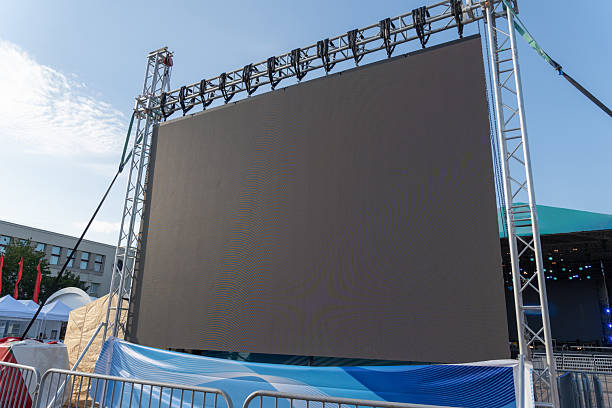
When planning a major live event, a music festival, or a corporate product launch, the visual centerpiece is almost always a high-brightness video wall. However, moving production equipment outside introduces unpredictable environmental variables. A sudden summer downpour, blowing dust, or humid coastal air can instantly destroy unprotected electronics, turning an expensive production into an immediate blackout.
In the event rental and staging industry, the standard response to these environmental risks is to demand an IP65 ingress protection rating. While maximizing protection is a safe bet, higher IP ratings often require heavier cabinets and significantly higher manufacturing costs.
Does your venue truly require an IP65 rating, or is a more cost-effective alternative sufficient? This technical guide breaks down the engineering behind IP ratings for outdoor stage LED display screens and provides a clear decision framework based on your specific venue conditions and geographic location.
1. The IP Rating Quick-Reference Matrix
The Ingress Protection (IP) rating system consists of two digits. The first digit (0–6) measures protection against solid particles like dust and dirt, while the second digit (0–9K) measures protection against moisture and liquids.
When evaluating modular outdoor stage LED display screens for live events, staging configurations generally fall into four key protection tiers:
| IP Rating | Solid Protection (First Digit) | Liquid Protection (Second Digit) | Ideal Staging Environment |
| IP20 | Covered outdoor stages, permanent pavilions, and temporary tents | Zero moisture protection | Strict indoor use, climate-controlled auditoriums |
| IP40 | Protected against small tools (>1 mm solids) | Zero moisture protection | Covered venues, temporary indoor/outdoor transit spaces |
| IP54 | Dust-Protected (Limited ingress, no harmful deposits) | Splashing Water (Water splashed from any direction) | Covered outdoor stages, permanent pavilions, temporary tents |
| IP65 | Dust-Tight (Complete protection against ingress) | Water Jets (Projected by a nozzle from any direction) | Fully exposed outdoor festivals, open-air stadium events |
2. Geographic Demands: Tailoring Protection to Your Location
Environmental threats vary significantly depending on where your event is taking place. To optimize your hardware budget, evaluate your stage location against three distinct geographical risk categories:
  Coastal / High Salt  ──> 🌊 ──> Mandatory IP65 + Specialized Anti-Corrosion Alloys
  Inland / High Rainfall ──> 🌧️ ──> Standard Configuration IP65 (Front & Rear Housing)
  Arid / Covered Pavilion──> ☀️ ──> IP54 Structural Shell Often Sufficient
Zone A: Coastal & High-Humidity Regions (Mandatory IP65)
If your venue sits near an ocean coastline, your display faces a double threat: high relative humidity and airborne salt fog. Saltwater mist acts as a powerful electrolyte that accelerates galvanic corrosion on copper PCB traces and power terminals.
- The Engineering Requirement: An IP65 outdoor stage LED display screen setup is strictly mandatory here. The completely sealed, dust-tight, and jet-waterproof enclosure prevents salty air from entering the rear electronics bay. Additionally, ensure your supplier provides specialized anti-corrosion coatings (conformal coating) across the internal PCBA.
Zone B: Inland, Variable-Rainfall Regions (Standard IP65 Setup)
For standard inland locations subject to unpredictable seasonal thunderstorms, sudden heavy downpours can flood an open-air stage in minutes.
- The Engineering Requirement: Fully exposed outdoor events must use an IP65 configuration. This standard ensures the display functions seamlessly even when hit by heavy rain driven by strong wind vectors.
Zone C: Arid Climates or Covered/Semi-Outdoor Venues (IP54 Alternative)
If the outdoor stage LED display screens are installed within a permanent outdoor pavilion featuring a deep, protective structural roof overhang, or if the event takes place in an arid desert climate with predictable weather patterns, the risk of direct water jet exposure drops significantly.
- The Engineering Requirement: An IP54 rating may provide sufficient protection. This configuration shields the components from blowing dust and accidental side splashes while allowing for a lighter, more ventilated chassis design.
3. The Hidden Cost of High IP Ratings: Weight & Capital
Opting for an ultra-high protection rating across an entire rental inventory involves significant engineering and financial trade-offs:
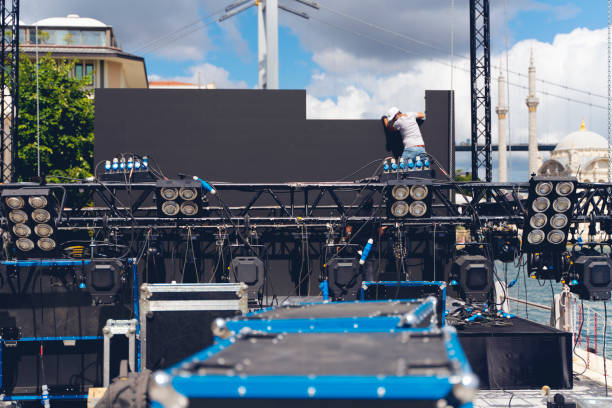
- Increased Cabinet Mass: Achieving a true IP65 rating requires heavy-duty aluminum or magnesium alloy die-cast cabinets equipped with continuous compression rubber gaskets, sealed cable connectors, and fully enclosed rear power boxes. This hardware adds substantial dead weight to each modular panel. Consequently, a large flying array will require heavier load-bearing ground supports, reinforced truss configurations, and larger staging motors—driving up your overall rigging and labor costs.
- Thermal Management Penalties: A completely sealed IP65 enclosure traps heat generated by the LED driver ICs and power supplies. To keep the pixels cool without introducing open-air vents, manufacturers must invest in high-efficiency, finned aluminum heat-sinks or expensive premium power units.
- The Budget Premium: Due to these specialized mechanical demands, a true outdoor IP65 panel incurs a premium cost compared to an unsealed indoor variant with the same pixel pitch.
4. Sourcing Playbook: Balancing the Screen Configuration
To get the best return on your investment, separate your display configurations by their application environments:
  [Indoor Rental Stock]   ──> Built to Standard Spec ──> Unsealed Lightweight Frames (IP20/IP40)
  [Outdoor Festival Stock]──> Built to Weatherproof   ──> Heavy-Duty Sealed Enclosures (IP65)
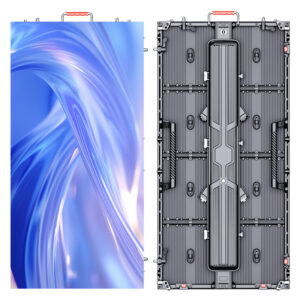
- The Outdoor Standard: Our dedicated outdoor stage LED display screens feature a native IP65 rating on both the front face and the rear enclosure doors. This dual-sided sealing ensures your screen can handle open-air events without requiring extra plastic rain covers or protective shields. They also feature high-brightness outputs (4,000 to 6,000 nits) to maintain clear visibility under direct sunlight.
- The Indoor Reality: Indoor configurations intentionally skip heavy waterproof gaskets to prioritize lightweight frames, thin profiles, and fast interlocking assembly mechanics, aligning with standard indoor operating requirements.
Conclusion: Match the Enclosure to the Environment
In live event production, structural safety and electronic reliability determine your brand’s reputation.
Avoid paying for excessive, heavy sealing protection if your panels are exclusively deployed under indoor convention center roofs. However, if your business specializes in fully exposed, open-air summer festivals or coastal venue events, choosing a true LED IP65 outdoor stage system is the only way to protect your hardware against sudden downpours and humid salt air. Explore LIHE’s latest line of modular, high-brightness outdoor LED panels today to find a durable, weather-tested display engineered for your next stage layout.

Add comment