
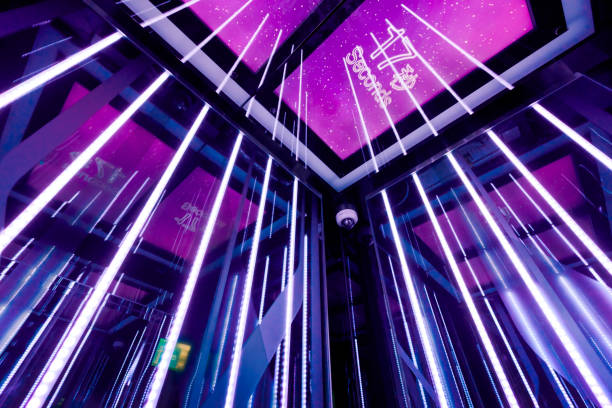
Designing a truly immersive environment requires moving beyond traditional wall-mounted screens. By utilizing the ceiling as a digital canvas, designers can transport visitors into entirely new worlds. Consequently, the “Sky Screen” has become a centerpiece for high-end malls, theme parks, and luxury venues. Achieving a seamless starry sky requires a specialized hanging LED display configuration and precise technical planning. This guide explores how to build a digital canopy that redefines interior perspectives. We help you turn an ordinary ceiling into a breathtaking cosmic journey.
The Architecture of an Immersive Canopy
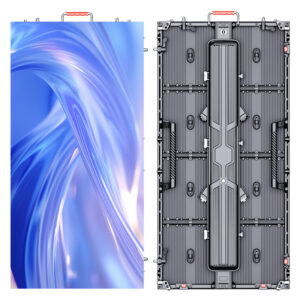
Creating a digital sky involves horizontally stitching multiple modular panels across a ceiling structure. Unlike wall screens, a hanging LED display must prioritize structural safety and perfect alignment. Consequently, specialized suspension hardware ensures that each module fits tightly against the next without visible seams. Furthermore, the content—whether it is a deep-sea world or a moving galaxy—flows across the panels as a single, unified image. This setup creates an “overhead horizon” that surrounds the viewer with light and color. Therefore, the ceiling becomes a primary storytelling tool rather than just a structural element.
Visual Immersion: Horizontal stitching creates a limitless perspective. Consequently, viewers feel a sense of “open-air” freedom even within an enclosed indoor space.
Pixel Pitch: Eliminating the “Grainy” Look
Viewer distance and angle are critical when designing a screen meant for upward viewing. Since visitors often stand directly beneath the display, a large pixel pitch can make images look blurry or pixelated. Consequently, a high-quality hanging LED display typically utilizes a fine pitch between P2.6 and P3.9. Furthermore, these smaller spacing options ensure that stars look like sharp points of light rather than large squares. This high resolution maintains the “magic” of the immersion even from close range. Therefore, choosing a smaller pitch is the key to achieving a realistic and professional finish.
- P2.6 – P2.9: Ideal for lower ceilings where viewers are within 3-5 meters.
- P3.9: Suitable for high-atrium installations where the ceiling is over 8 meters tall.
- Refresh Rate: High refresh rates prevent flickering when guests take photos or videos of the ceiling.
Technical Selection for Sky Screens
| Feature | Standard Wall LED | Hanging LED Sky Screen |
| Viewing Angle | Horizontal / Frontal | Downward (Looking Up) |
| Pixel Pitch | P4.0 – P10.0 (Outdoor) | P2.6 – P3.9 (Fine Detail) |
| Weight Priority | Standard | Ultra-Lightweight Cabinets |
| Visual Content | General Ads / Video | Starry Skies / Underwater / Space |
Consequently, the hardware must be significantly lighter to ensure safe long-term suspension. Furthermore, advanced power management reduces heat buildup in the ceiling cavity. Therefore, a professional hanging LED display project balances visual beauty with rigorous mechanical engineering.
Conclusion: Reaching for the Digital Stars
A digital sky screen turns an empty ceiling into an unforgettable emotional experience.
Stop limiting your visual projects to flat walls and standard rectangular frames. Instead, embrace the limitless creative potential of a professional hanging LED display system. Consequently, your venue will become a landmark that captures the imagination of every visitor. Experience the power of immersive technology by looking up toward a brighter future today. Your space deserves a ceiling that is as vast as the universe itself.
Add comment